

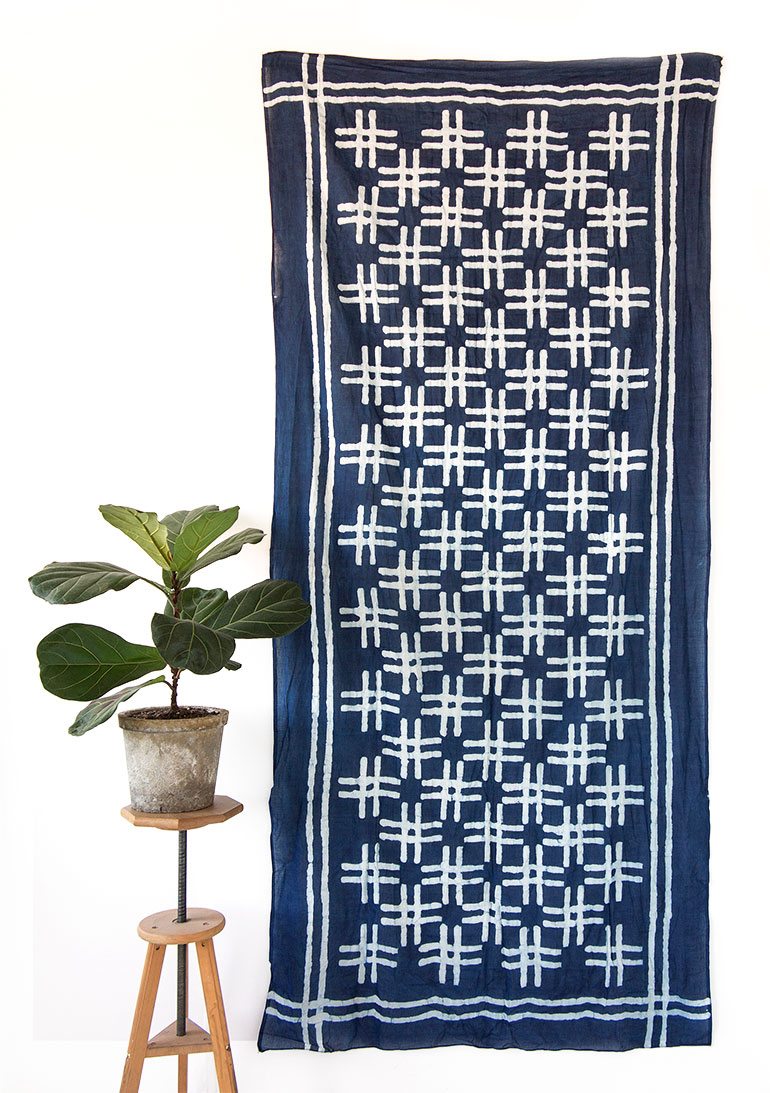
Mud resist block printing
We’ve just launched our second range of traditionally-made block printed scarves, designed by me, but made the old-fashioned way with wooden blocks and vegetable dyes, in a small printing compound in Bagru, India.
The Weft design is the first time we’ve had a mud-resist and indigo dyed item made, and I thought you might be interested to see how this process works. It’s quite something!
Follow this way, please, we’re off to Sanganer…
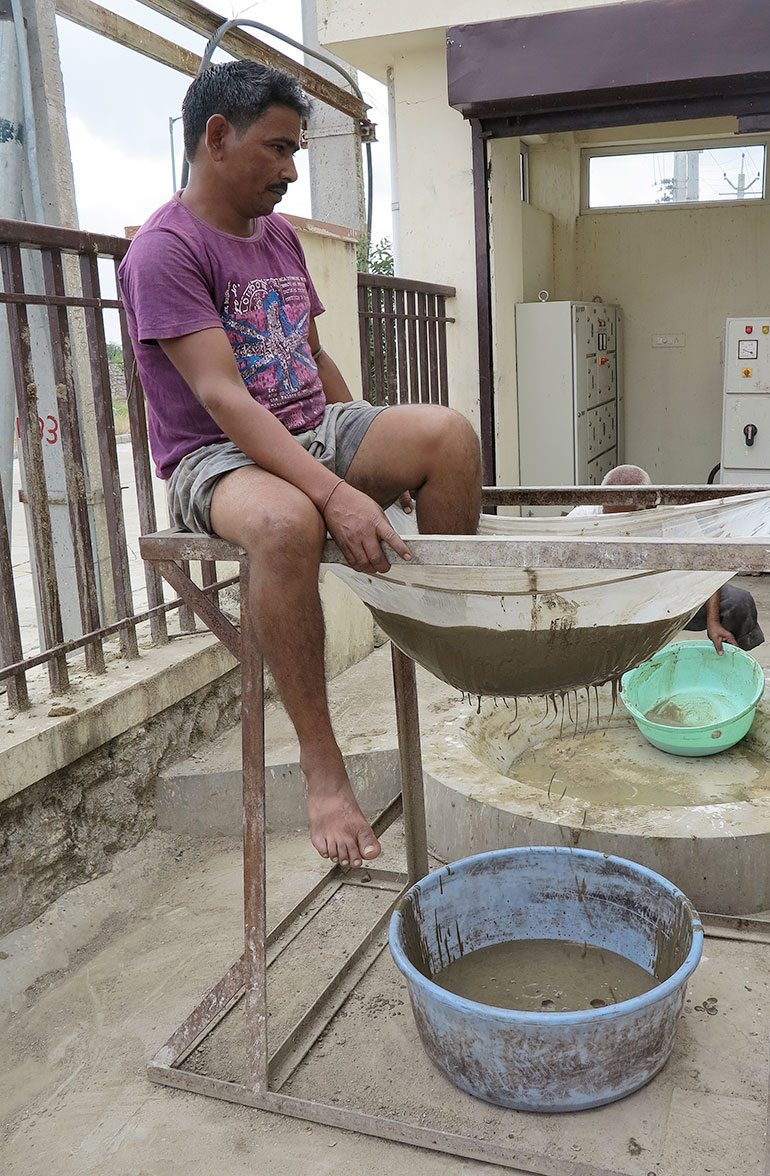
A mixture of tree gum, mud collected from dry lakes, and a byproduct of the wheat industry is mixed (by foot!) and sifted, creating a smooth, sticky bowl of mud.
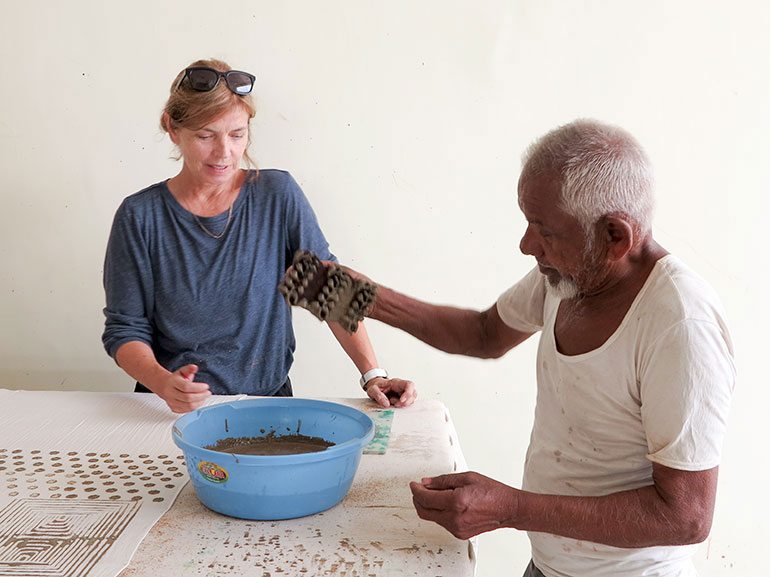
Using a carved wooden printing block, mud is transferred to the fabric. It’s quite a splattery process!
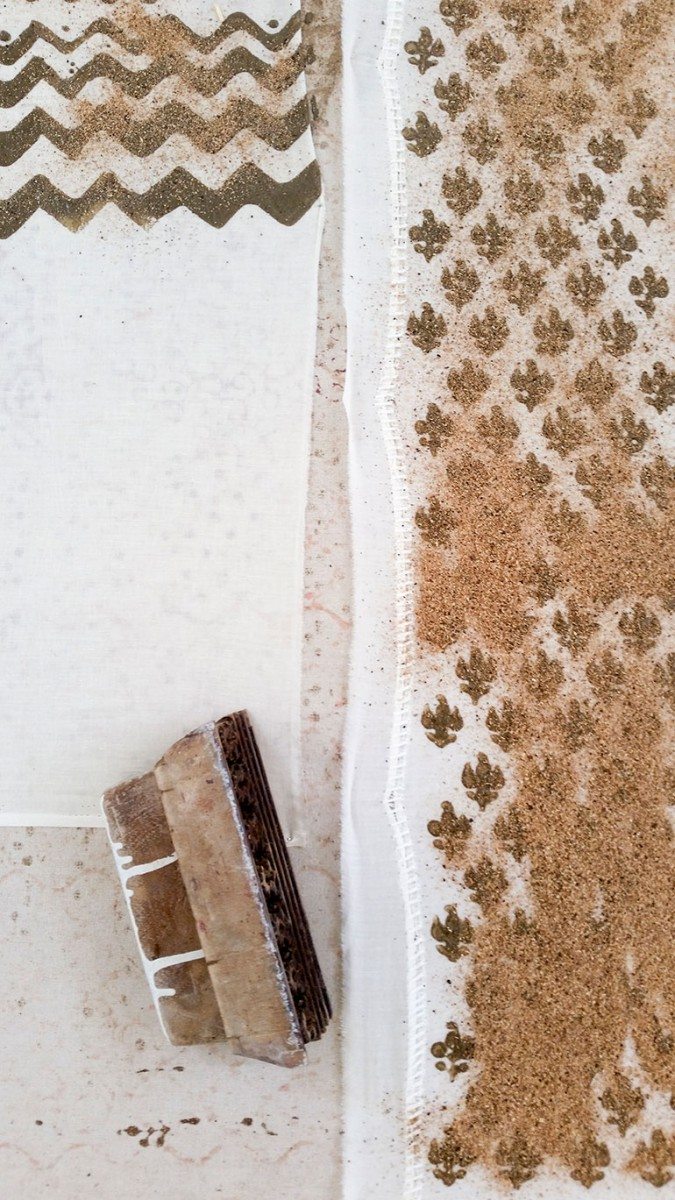
While the mud is still wet, sawdust is sprinkled onto the printed mud, to speed its drying, and to stop the mud from transferring when the fabric is laid out in the sun to dry.
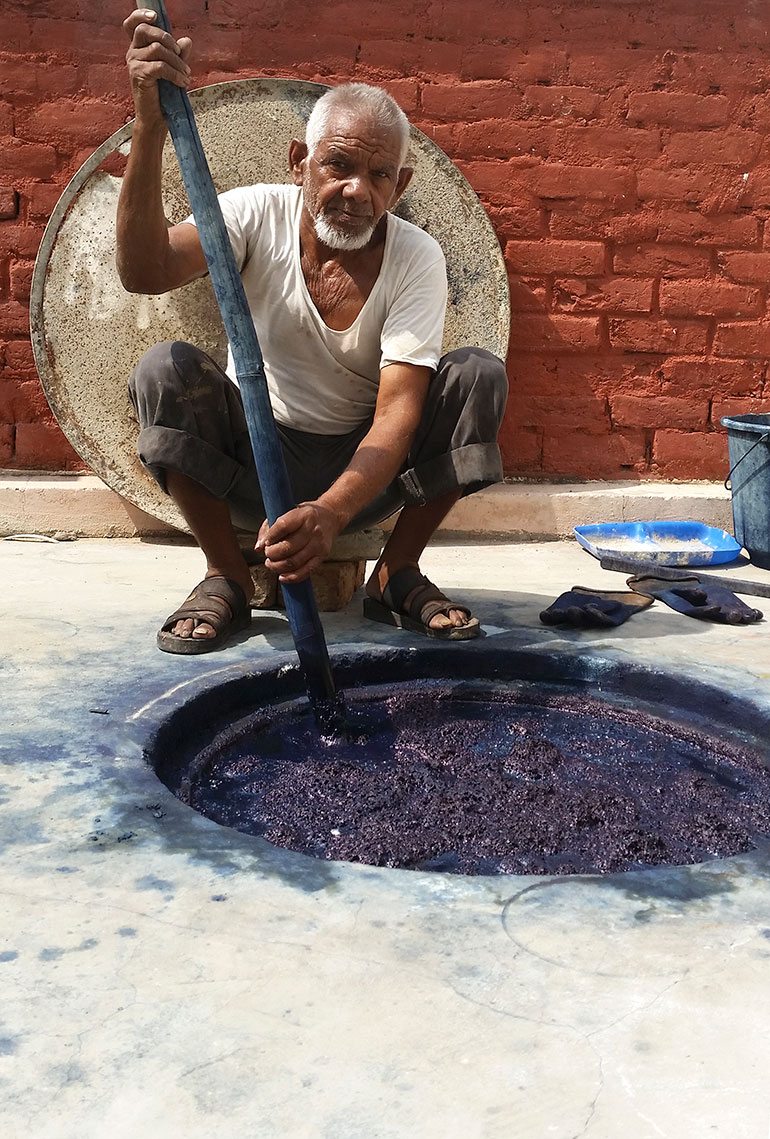
After drying, the scarves are carefully dipped into a deep vat of natural indigo dye and stirred gently with a long pole. The blue colour of indigo is caused by an oxidation process, so care must be taken not to get air bubbles into the vat, as it will cause an uneven dye process.
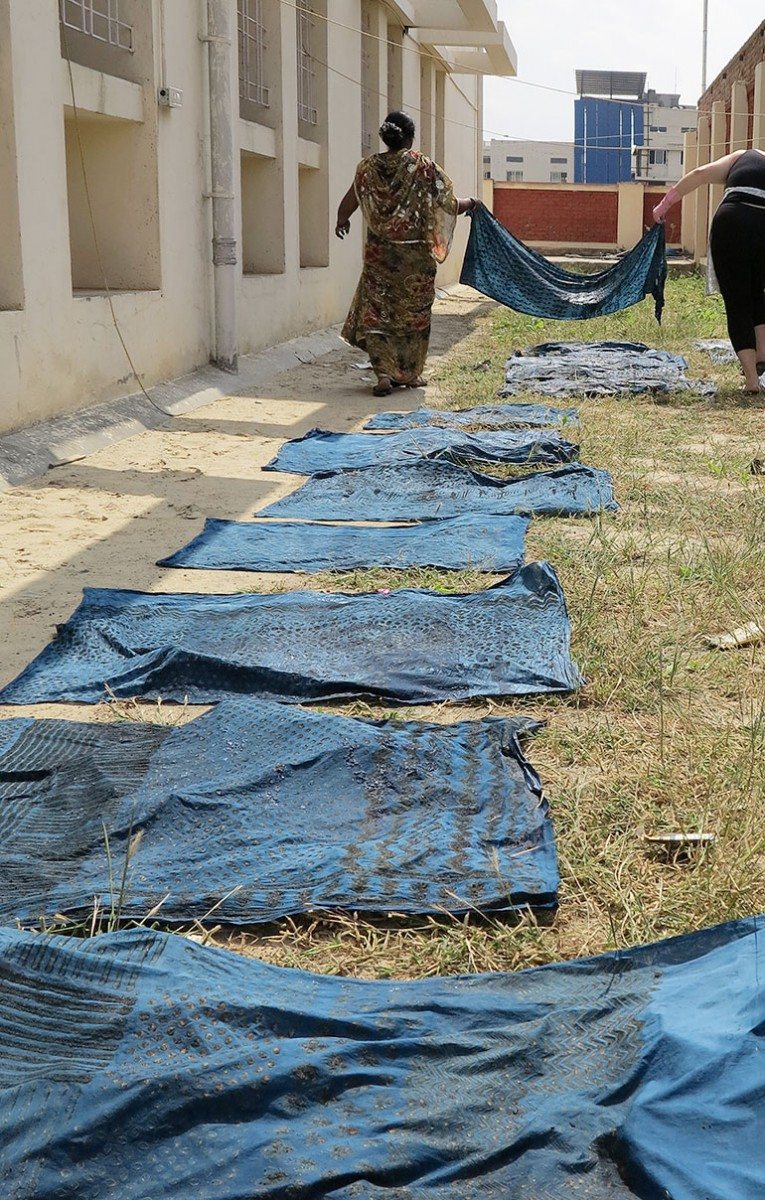
Sunshine and oxygen are the essential ingredients for the blue of indigo, so the dipped scarves are laid in the sun to dry. You can see the mud is still sticking to the fabric, protecting those bits from making contact with the colour.
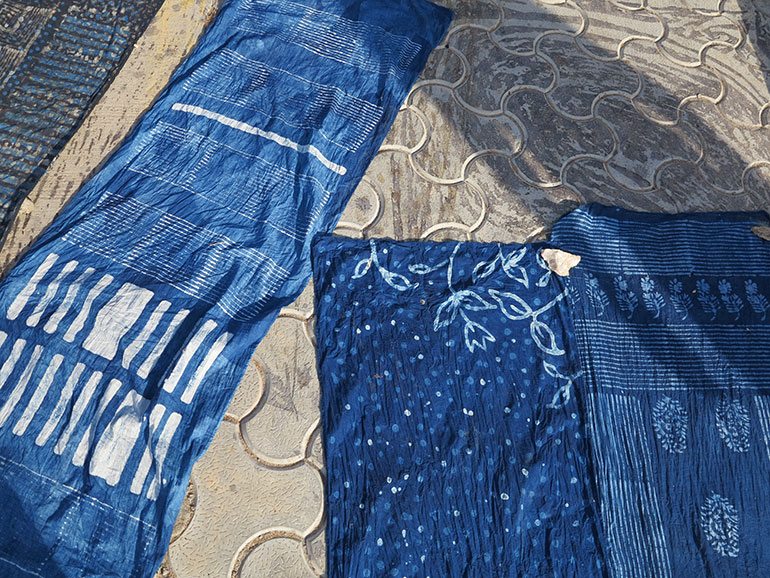
A final wash with a mordant called Alum, which sets the dye with the fabric, removes the mud, revealing the white fabric that the mud had covered, and the scarves are dried once again.
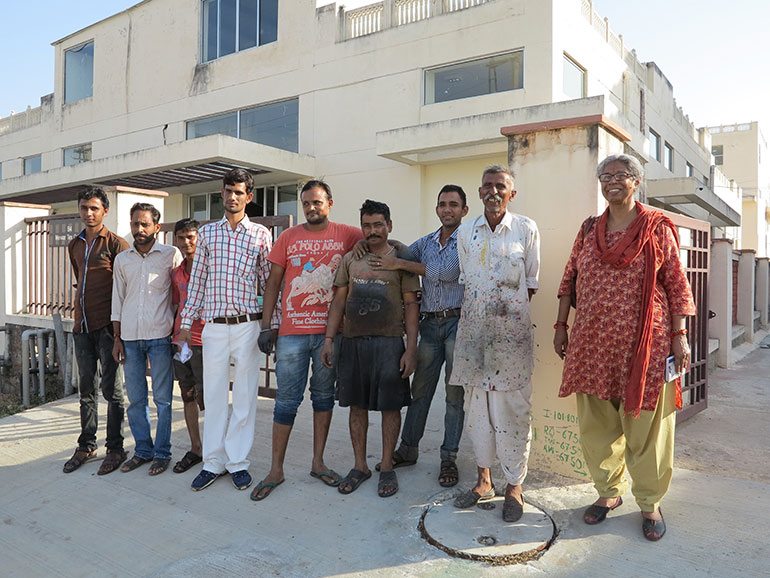
Block printing and indigo dying is an extraordinary amount of hard work. Every step of the way, hands are hard at work, washing and preparing fabric, stamping patterns, carefully dying, drying and then washing once again. I’m simply awed by the process and by the people who do it. This is Ms Raj Kanwar and the team at Ojjas in Sanganer, who taught the Ritchie Ace Camp group. A round of applause, please!
Barbara
Hi there. This looks so exciting. What fabric is it printed on? I just love indigo and am very keen to see this range.
Good luck! I just love your style and wish you every success! Regards. Barbara.
skinnylaminx
Thanks, Barbara. They turned out so well! We did mud resist on fine cotton dupatta scarves, then dyed them in Indigo. See the results at https://skinnylaminx.com/product/scarf-weft/
All the best,
Heather
Lien Van der Linde
WOW! how fascinating! Thank you for sharing this wonderful magical experience!
Those are beautiful images and cloths!l!!
Where could i get some of the indigo dye, i ‘ve wanted to try it for a while, but now i am inspired and determined to do so!
(i am living in Botswana – and i’m thinking the very fine salt pan mud might work very well!- i’m wondering what could be used for the tree gum mmmm to make it stick to the fabric while in the dye bath mmmm)
skinnylaminx
Hi Lien
So pleased you enjoyed this. I am not sure where to get indigo dye, as I’ve only used it in the context described here, in Jaipur. Try asking at your local craft shop, or otherwise, I’m sure you could find some online. There are also loads of interesting natural dye tutorials online at the moment.
Happy dyeing!
All the best,
Heather